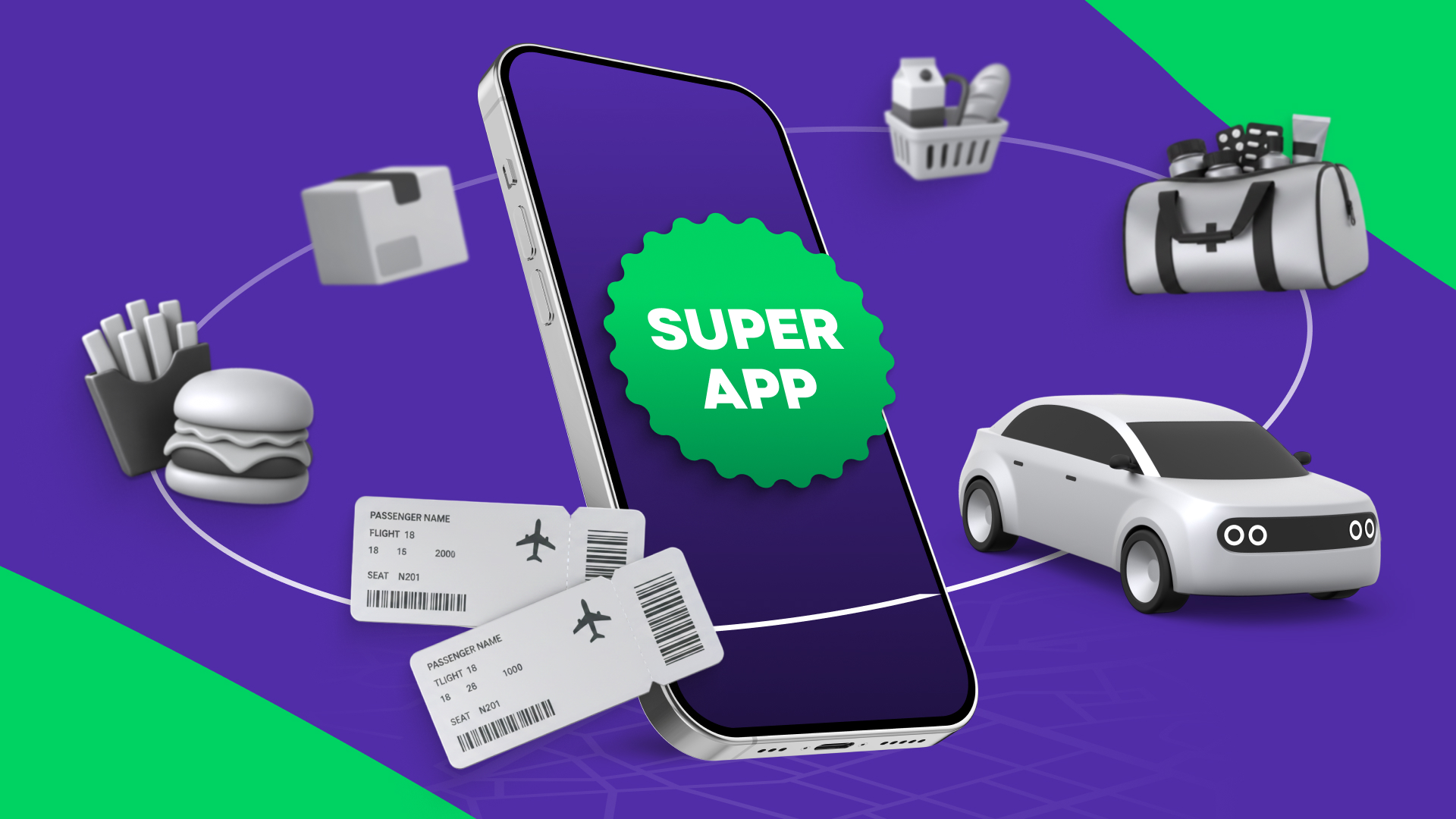
"There’s an app for that."
For years, that was Silicon Valley's answer to every problem. Need a ride? There's an app for that. Hungry? There's another app for that.
For a while, consumers embraced the convenience. But somewhere along the way, the solution became part of the problem. Today's consumers are juggling:
- dozens of accounts and passwords
- disconnected payment methods
- endless push notifications
- recurring subscriptions they barely remember signing up for
For many people, every extra screen and notification is another hoop to jump through to accomplish their tasks. After all, most of us don't wake up excited to download a new app.

The rise of super apps is a natural response to a growing demand for simplicity in a fragmented digital world, and it's not slowing down. According to IMARC Group, the global super apps market was valued at USD 114.2 billion in 2025 and is expected to reach USD 595.8 billion by 2034, growing at a CAGR of 20.15%. Asia-Pacific currently leads the market, accounting for nearly half of global adoption.
Some of the leading platforms in the world are becoming multi-service ecosystems
Some of the world's largest digital platforms started by solving a single problem exceptionally well. And once they earned customer trust, they started expanding into other services.
| Platform | Originally known for | Today, customers can also... |
| Uber | Ride-hailing | Order food, groceries, package delivery, and courier services |
| Booking.com | Hotel bookings | Book flights, rental cars, airport taxis, and attractions |
| Airbnb | Short-term accommodation | Book experiences, tours, and local services |
| Grab | Ride-hailing | Order food, groceries, pay bills, send packages, and use financial services |
| Gojek | Motorcycle ride-hailing | Access food delivery, logistics, payments, and household services |
| Messaging | Pay bills, shop online, book appointments, order services, and access thousands of mini-apps | |
| Alipay | Digital payments | Access transportation, travel bookings, food ordering, healthcare, and local services |
Different markets take different paths, but the goal can be summed up as: become the place customers turn to when they need something done.
How businesses earn more with a multi-service app
The customer benefit is straightforward: fewer apps to manage and fewer interruptions throughout the day.
For business owners, the impact goes much deeper.
Every customer a business acquires through marketing, referrals, or word of mouth represents an investment and comes at a cost. If a customer uses your app for just one service from time to time, the return on that investment is limited. But when this same customer starts using your platform for a whole bunch of on-demand services, the economics change dramatically.
A multi-service platform can help businesses:
- Increase customer lifetime value
- Generate more transactions per user
- Cut customer acquisition costs
- Improve retention and engagement
- Create cross-selling opportunities
- Build a more complete picture of customer behavior
Let's compare separate apps with a unified platform to see the difference even more clearly:
| Scenario | Separate apps | Single multi-service app |
| Customer acquisition cost | Paid multiple times | Paid once |
| User retention | Service-specific | Platform-wide |
| Marketing campaigns | Separate budgets and messaging | Unified campaigns can be run |
| Customer data | Fragmented | Centralized |
| Cross-selling | Limited opportunities | Built into the customer journey |
Consider a customer who initially downloads an app to book taxi rides. If that same platform later becomes their preferred way to order food delivery or house cleaning services, the business gains additional revenue streams "for free".
Powered by independent AI
Ask AI how Onde can help your mobility or delivery business grow.

You don't need Uber's budget to launch a Super App
Looking at companies like Uber or Grab, you might think that building a multi-service on-demand platform is difficult and expensive. And to be fair, those companies did invest years of development and significant budgets in expansion.
For a long time, the super app model was out of reach for everyone else.
But today, businesses don't need to build every feature from the ground up thanks to ready-made solutions.
| Custom Super App development | Onde Super App | |
| Time to launch | 12–18 months | 6 weeks |
| Upfront investment | Over $50K | $6.5K |
| Engineering team needed | 15–40 engineers | Not required |
| Multiple services | Build each one separately | All included |
| Your focus | Solving technical problems | Operations, partnerships, and growth |
A solution like Onde's Super App provides the infrastructure needed to launch and manage ride-hailing, food delivery, grocery delivery, pharmacy delivery, courier services, and other on-demand offerings within a single ecosystem.
Instead of building the technology first and the business second, Onde's partners can focus on validating demand, growing partnerships, and serving customers.

Ready to build your own Super App? Start here
Step 1: Identify the right expansion opportunity
A successful super app isn't built by adding as many services as possible. It's built by adding the right services.
Before launching a new offering, ask yourself:
- What do our customers already trust us to do?
- Which services would complement our existing business?
- What local demand isn't being met?
- Can we leverage our existing drivers, couriers, or operations?
For some operators, food delivery is the obvious next step. Others may find stronger demand for pharmacy delivery, grocery orders, roadside assistance, courier services, or home services.
Step 2: Make sure your technology can support it
Once you've identified an opportunity, ask yourself one more question: can your current software support that expansion?
Onde's Super App gives operators a ready-made ecosystem for launching and managing multiple on-demand services under one brand.
Like the article? Share it with your friends!
Related posts
-
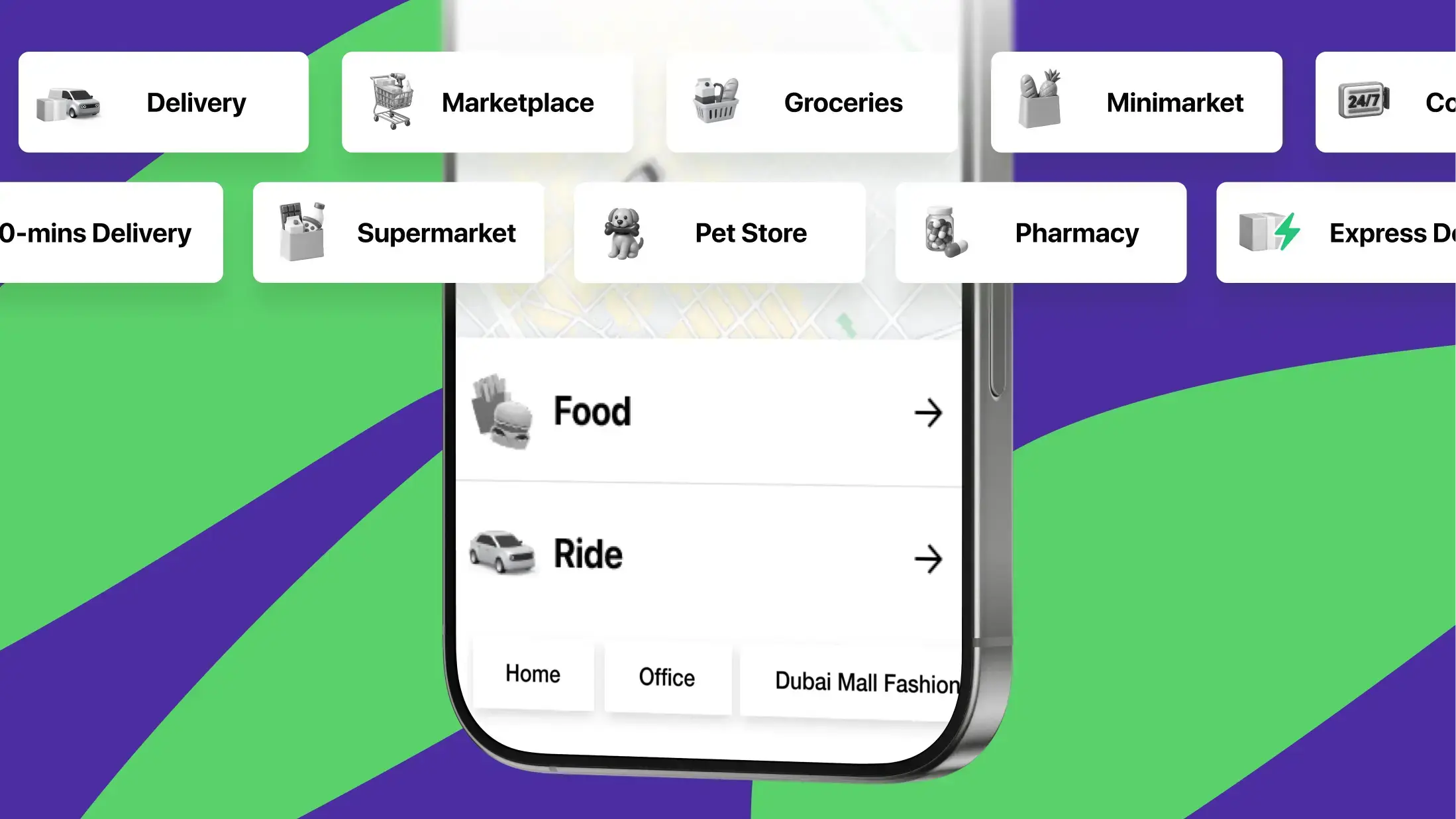 Learn how taxi and ride-hailing businesses can add delivery services, increase fleet utilization, and launch in as little as 3–6 weeks with Onde + Playfood.
More than just taxi: how to launch a Super App in 6 weeks
-
 The European taxi and ride-hailing market is one of the most fragmented and competitive in the world. In this environment, the right technology stack can give a taxi business a decisive edge.
Top 5 Ride-Hailing Software Platforms in Europe in 2026
-
 A weak driver app leads to churn and lost revenue. Learn which features keep drivers engaged, boost efficiency, and turn your platform into a scalable operation.
Driver Apps in 2026: What They Need to Have and Why It Matters